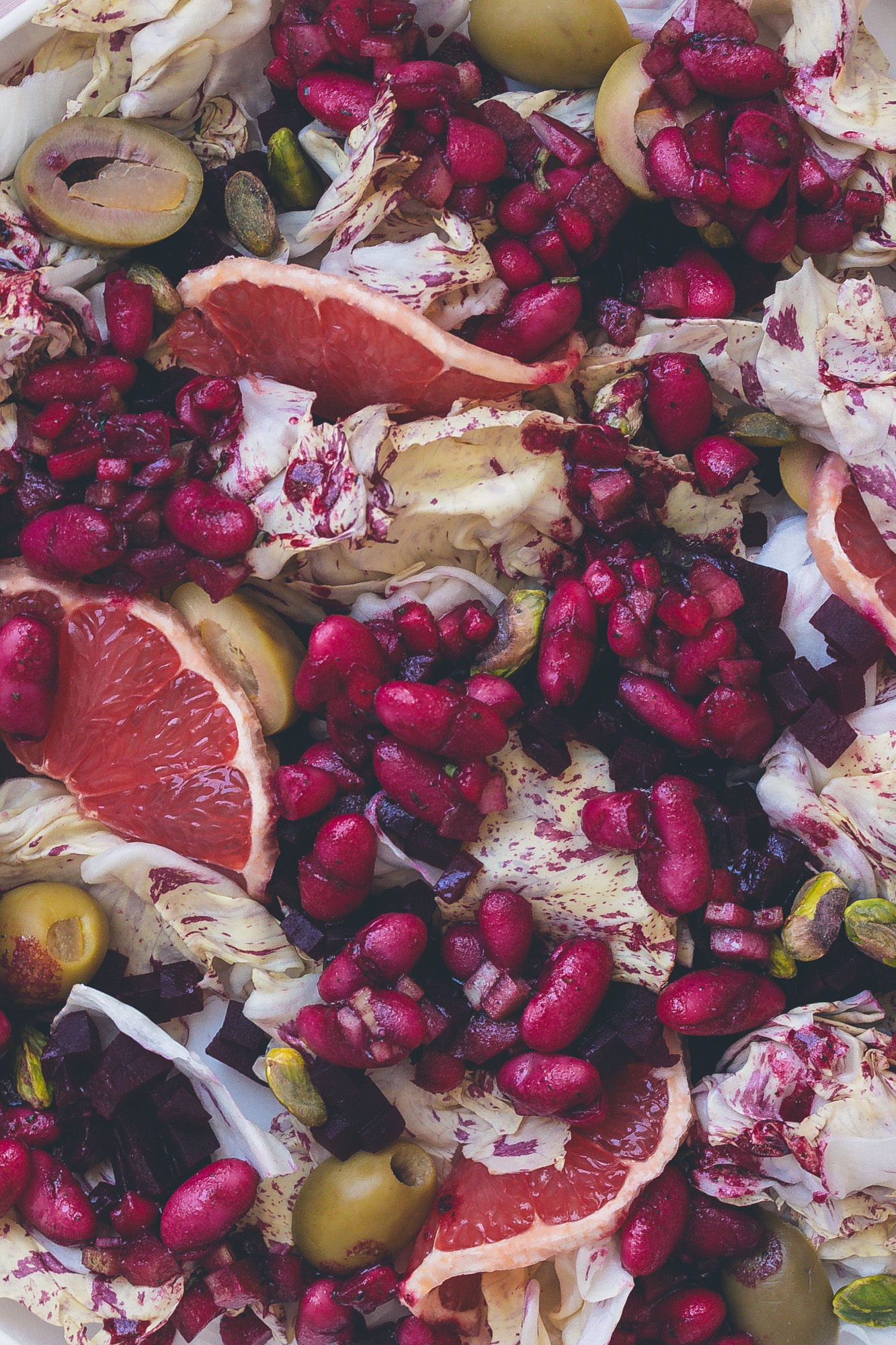
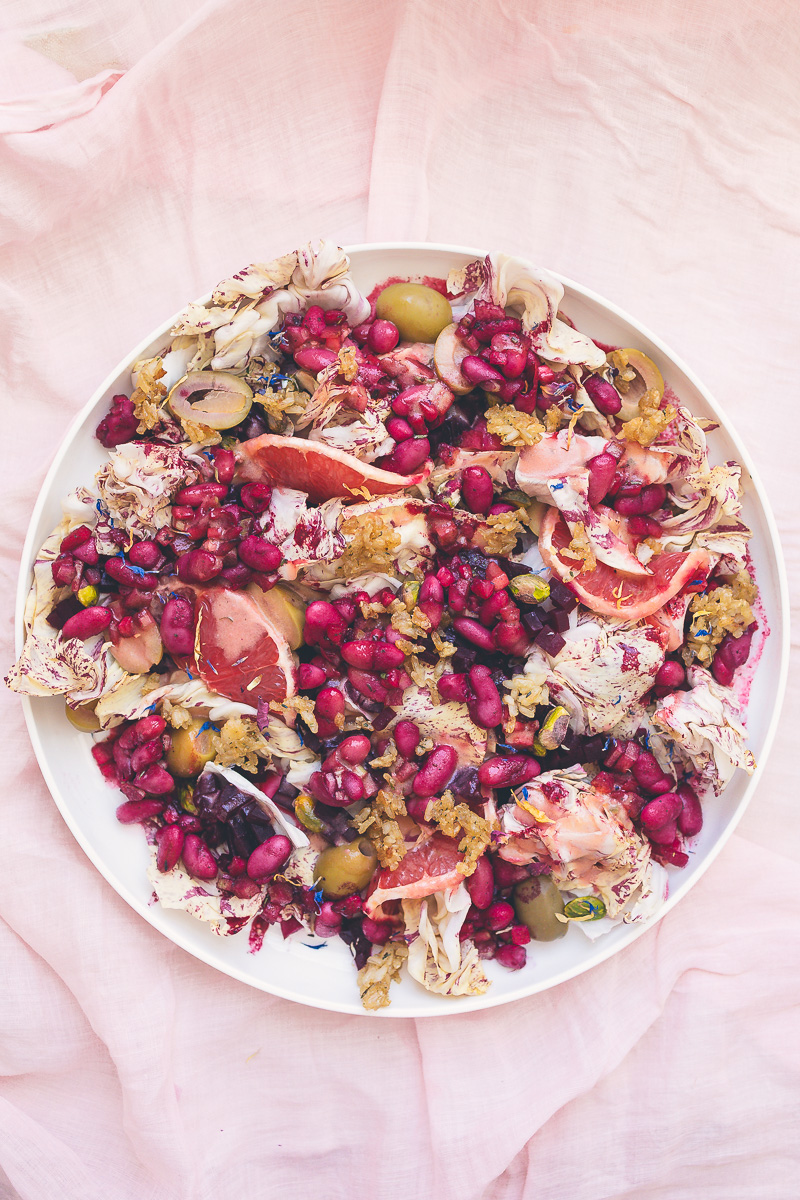
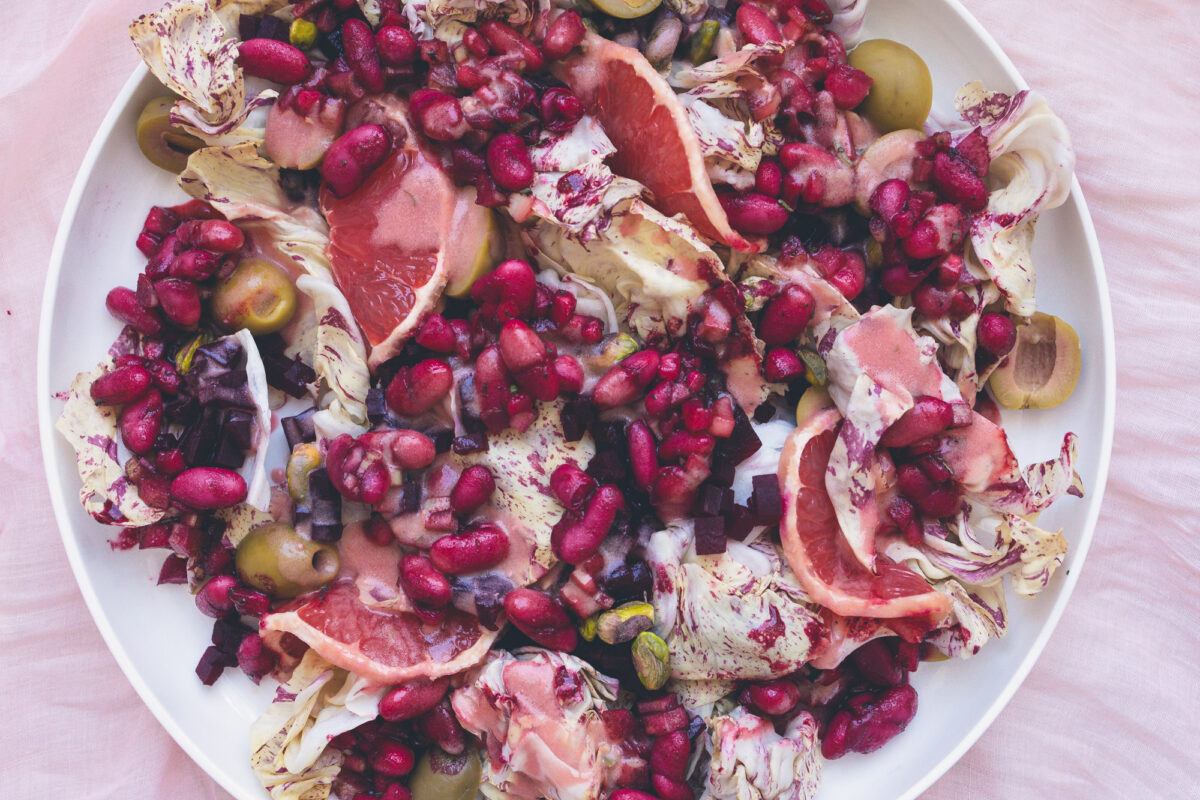
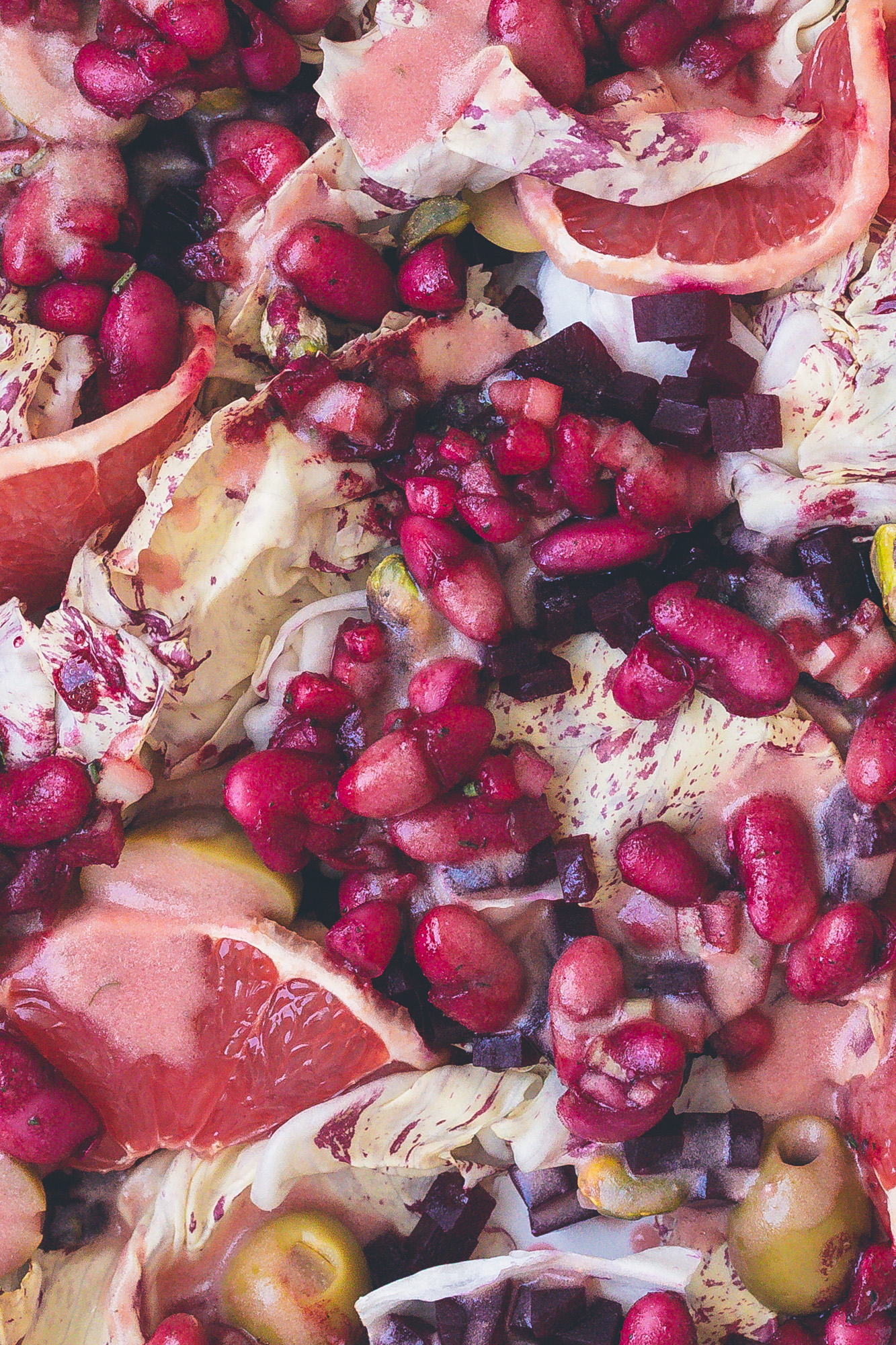
This radicchio, beet, and white bean salad (with extra plant pigments, as you will see) embodies a plant-rich approach to nourishing our hearts in ways we might not think of for Valentine’s Day. The slightly bitter radicchio is rich in anthocyanins, jewel-toned beets are packed with betalains, and protein-rich white beans are paired with a pitaya-powered vinaigrette that makes the whole plate a bit like edible art. Add to this olives and crisp pistachios to round it all out. Each fun bite offers a range of textures and flavors that can draw us into the present moment with a sweet flavor beneath it all.
The Quiet in the Pause
Sometimes the answer to exploring new tastes at a holiday meal is not about restriction or rigid rules. It’s in the act of slowing down enough to taste what you’re eating. When you engage your senses fully, such as by noticing the colors, textures, and flavors on your plate, you signal safety to your nervous system. That’s when internal stressors have an opportunity to begin to quiet.
This Valentine’s Day, consider celebrating with foods that truly nourish you. Dark chocolate is still welcome at the table, but so is a plate filled with anti-inflammatory compounds that your heart will thank you for.
Radicchio, Beet & White Bean Saladwith Pitaya Vinaigrette
Let’s explore a salad built on plant pigments…. color from phytonutrients from dried plants, not dyes.
This dish centers on bitter, mineral-rich vegetables that support cardiovascular health through their natural compounds. Anthocyanins from radicchio. Betalains from beets. Polyphenols woven throughout. The pitaya vinaigrette imparts a floral note and a remarkable magenta hue without artificial coloring. The result is vibrant, texturally varied, and genuinely nourishing. Let’s explore the ingredient, and then the recipe follows.
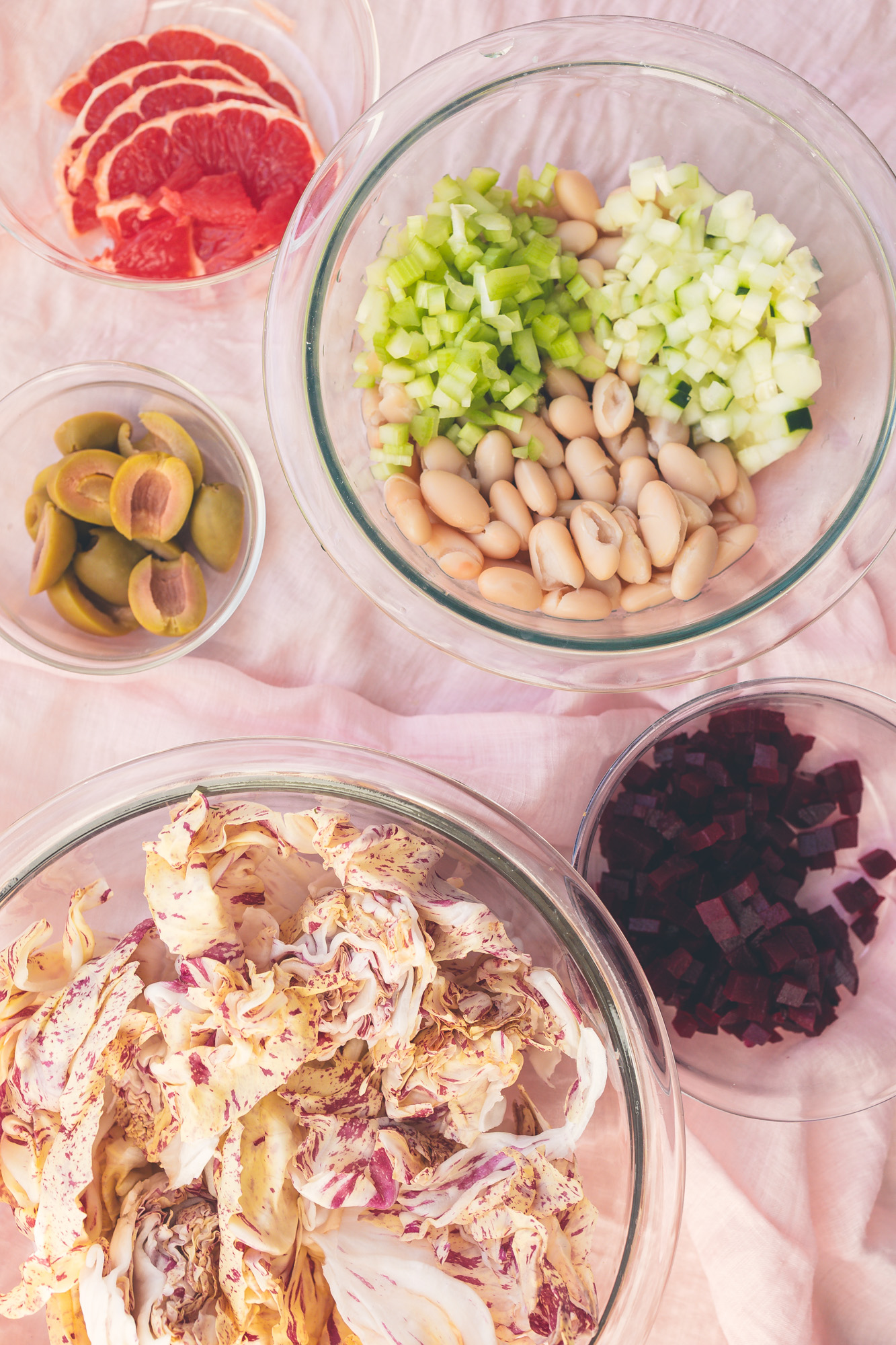
Bean Base
White beans (cannellini or great northern work too)
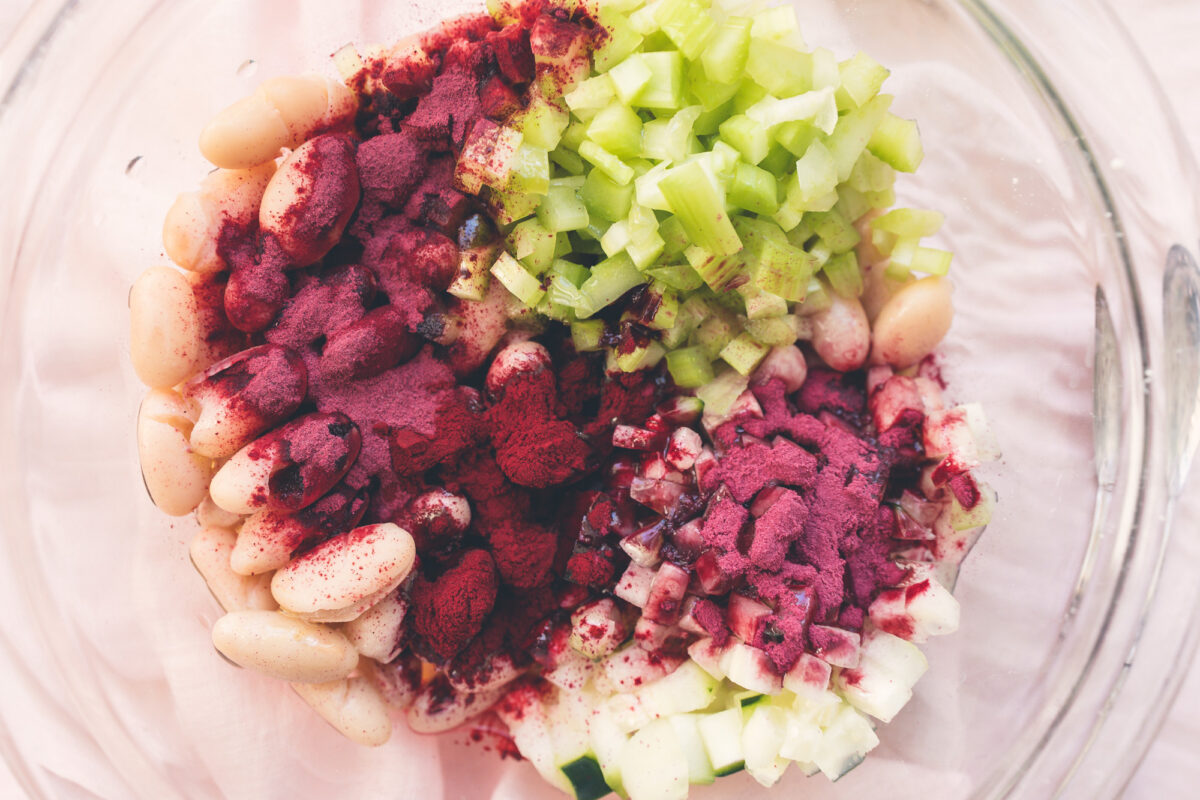
Combine and let marinate briefly. The beans absorb the herbs and colors. Look at the fun plant-pigments that are being added to this salad!
Substitutions
Chickpeas for white beans if preferred
Fennel in place of celery for gentler digestion
Jicama instead of cucumber for added crunch
Toppings
Radicchio, shaved thin
Orange segments (reserve juice) – I used Cara Cara, though you could omit
Castelvetranos Green olives, halved
Roasted beets, cubed
Pistachios, roughly chopped
Pitaya Vinaigrette
Olive oil
Lemon juice + reserved orange juice
Dijon mustard
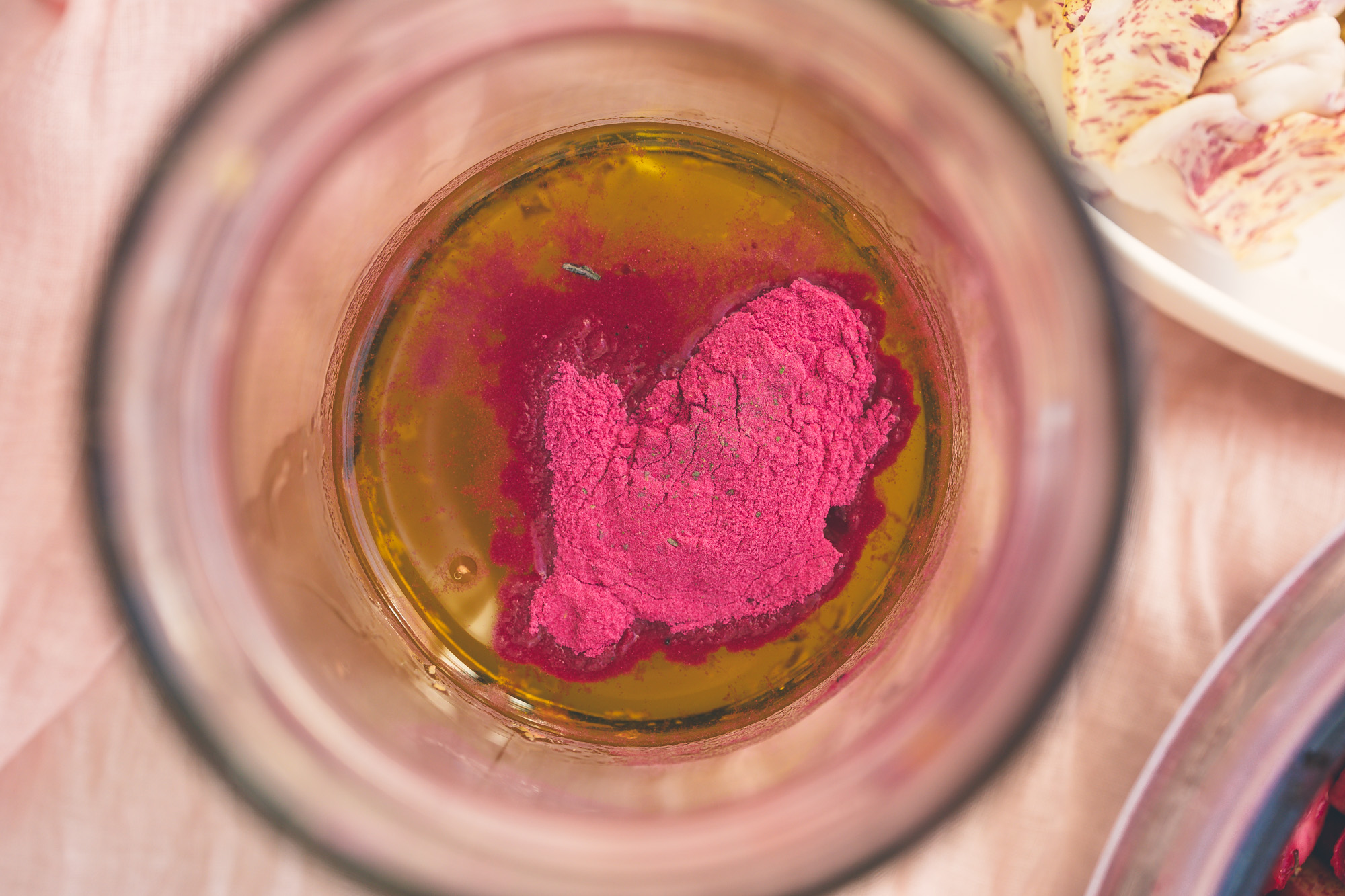
Pitaya powder (plant pigment)
Mineral salt
Whisk until emulsified. That color is from dragon fruit and is sooo vibrant with a whisper of pink.
Arrange the salad base. Layer the toppings. Drizzle the vinaigrette.
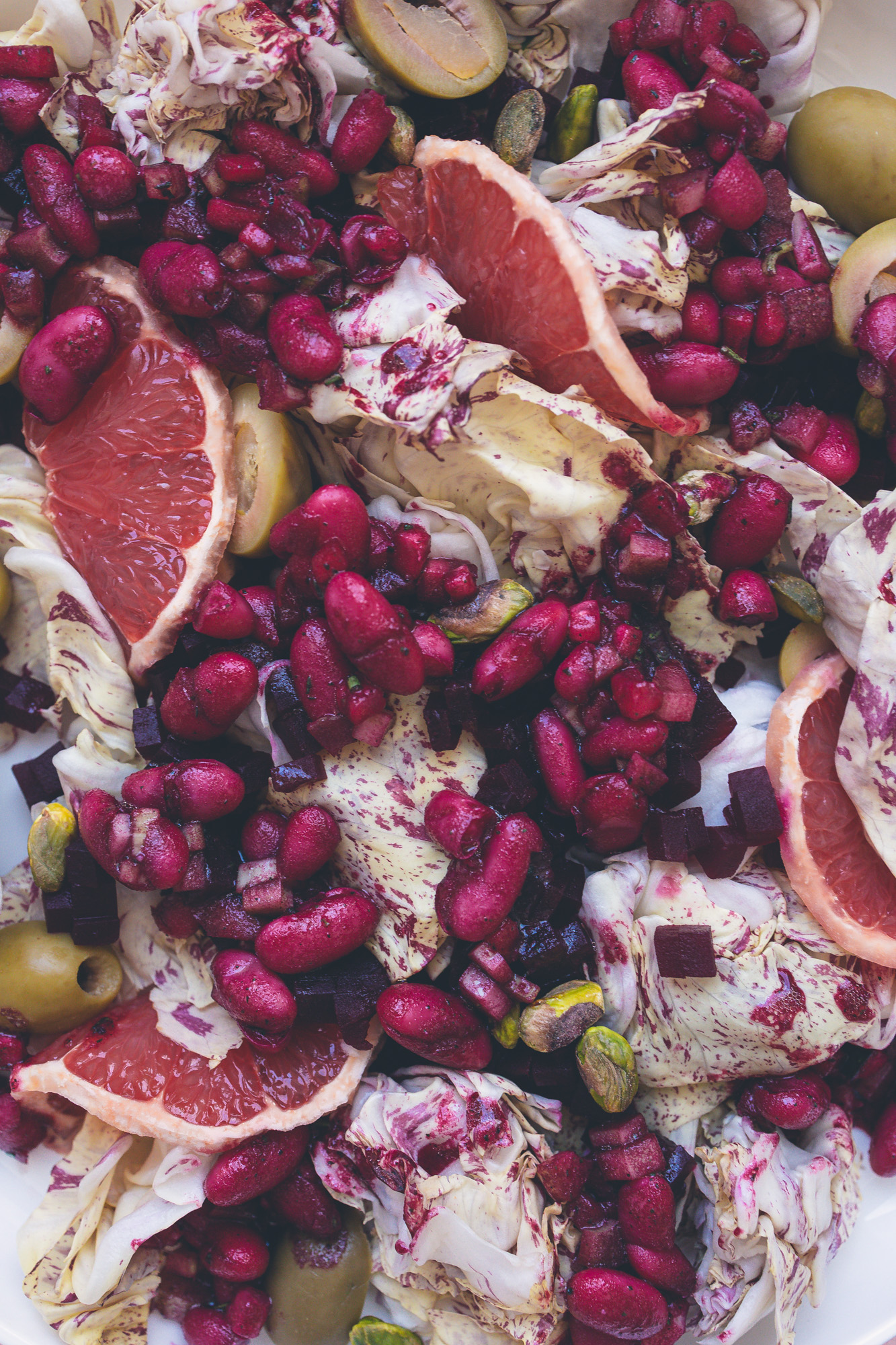
This is a great point to notice the textures, smells, colors, sounds: creamy beans, crisp vegetables, bitter greens, sweet citrus.
Self-regulation can look like slowing down enough to experience our sensory input: the way bitter and sweet play together, the contrast between creamy and crisp, the colors that signal nutrient density. This is another way to celebrate Valentine’s Day, with foods that nourish you.
You can unsubscribe at any time. Review our privacy policy here.
Nutrient-Dense Ingredients!
This salad also reminds me that a celebration doesn’t require sweetness. It can be vibrant and textured.
Across culinary traditions, eating for the heart can be less about restriction and more about inclusion. When we choose foods rich in anthocyanins, betalains, and polyphenols, we’re not denying ourselves; we’re inviting in compounds that reduce inflammation, support vascular health, and nourish on a cellular level. From a food-as-medicine standpoint, this supports cardiovascular resilience and metabolic balance. It also keeps our plates interesting without requiring perfection, which can lead to decision fatigue and stress as we prepare to cook.
Please help me get the word out about healthy plant-based living by sharing this post on your social media.
To Serve:Arrange the base on a platter with torn radicchio. Top with shaved bean salad, orange segments, beets, olives, and pistachios. Drizzle generously with the pitaya vinaigrette.
Slow down. Taste each bite and see how the bitter, salt, and acid work together.
Notice the textures, the colors, the way bitter and sweet play together.
Prep Time:30
Food Noise Isn’t Always Hunger: A Heart-Healthy Valentine’s Day with Radicchio, Beet & White Bean Salad
Understanding Food Noise
“Food noise” is a non-clinical term used to describe persistent mental chatter about “what to eat” that is not always related to true hunger (Dhurandhar et al., 2025). For some, it stems from the fatigue of scrolling through endless food content online, pushing through days without pause, or navigating conflicting nutritional advice, coming to the thought, “What am I eating next?” We’ve been taught that managing these thoughts is about willpower, but emerging research tells a different story: it’s about exploring how stressful states can bring a different perspective to our approach to nourishing ourselves (Dhurandhar et al., 2025; Rosinger & Brown, 2025). I think it is valuable to consider another component as well with regard to the origins of “food noise.”
Making this Radicchio, Beet & White Bean Salad could serve as an example of how being in the kitchen can reduce food noise and support stress reduction through a mindful approach to food preparation and engaging our senses during eating.
The Nervous System and Survival Mode
When your nervous system has been pushed into survival mode by chronic stress, sleep deprivation, unresolved trauma, or relentless stimulation, it doesn’t simply “overreact.” According to Somatic Experiencing (SE) theory, it organizes your entire perception around threat (Payne et al., 2015).
Drawing on Peter Levine’s Somatic Experiencing framework, when defensive responses remain incomplete, they may persist beneath the surface (Payne et al., 2015). The SE approach suggests that if fight-or-flight energy never fully discharges, the mind attempts to explain the body’s activation. Our thoughts can race. Stories form, and it becomes difficult to distinguish what is happening now from what the nervous system experienced long ago (Levine, 2010; Payne et al., 2015).
Bessel van der Kolk’s work reminds us that trauma (as we currently understand it) is not the event itself but the imprint and impact left in the body when the right care has not been provided (van der Kolk, 2014). When the body is hypervigilant (activated into fight-flight more) or shut down, cognition follows suit. Our thinking brain is recruited to justify physiological arousal. I believe food noise may arise from our “survival brain,” which consistently signals about food and food supply. That is why “just calm down,” “be rational,” or “try harder” doesn’t work; the body’s stress responses drive the internal narrative (van der Kolk, 2014).
The Path to Regulation
The solution is not willpower or better motivation. According to SE theory, it is regulation (Payne et al., 2015). Regulation, in this context, refers to the process of helping the nervous system complete interrupted defensive responses and return to a state of safety and connection, rather than remaining stuck in survival-based activation or shutdown.
Tanmatra Chikitsa: Ancient Sensory Regulation
While Somatic Experiencing is a relatively modern framework developed in the 1970s, the concept of using sensory pathways for healing and nervous system regulation has ancient roots. Tanmatra Chikitsa, Ayurveda’s subtle sense therapy, has used the five senses as therapeutic tools for millennia, targeting sound, touch, sight, taste, and smell to transform the internal landscape of body, mind, and spirit (Ayurveda Pura, n.d.; Banyan Botanicals, n.d.).
Tanmatra Chikitsa is described as an Ayurvedic sensory therapy that supports the well-being of the nervous system (Kripalu Center for Yoga & Health, n.d.). According to Ayurvedic philosophy, “the pathway to health is through the body, not in denial of it,” recognizing that we can heal and nourish our entire elemental being through our five senses (Banyan Botanicals, n.d.).
This ancient framework shares remarkable parallels with contemporary somatic therapies in its understanding that regulation occurs through gentle sensory engagement through what we ingest via our senses of hearing, touching, seeing, tasting, and smelling, as these experiences leave physical, mental, and emotional impressions that shape who we are (Ayurveda Pura, n.d.). When we prepare and mindfully consume nourishing foods like this radicchio and beet salad, we engage multiple sensory pathways simultaneously: the visual beauty of vibrant colors, the tactile experience of preparation, the bitter and sweet tastes, and the aromas, creating an integrated experience of regulation through embodied presence.
Supporting Nervous System Regulation
To bring balance to the system, we can explore completing what was interrupted and allow the autonomic nervous system to move from mobilization (fight/flight) or collapse (freeze) toward safety and connection. And in fact, further to rest and digest, parasympathic activation is so useful for digestion. The SE approach suggests this can include (Payne et al., 2015):
Slow, rhythmic movements that may allow discharge
Predictable routines that signal safety
Nourishing foods that stabilize blood sugar and support vagal tone
Gentle sensory input that tells the body: You are not in danger right now
When the body shifts gears, perception may clear. When physiology settles, thoughts can organize more coherently. Regulation precedes clarity.
Dhurandhar, E. J., Allison, D. B., Cheskin, L. J., & Maki, K. C. (2025). Food noise: definition, measurement, and future research directions. Nutrition & Diabetes, 15(1), Article 382. https://doi.org/10.1038/s41387-025-00382-x
Levine, P. A. (2010). In an unspoken voice: How the body releases trauma and restores goodness. North Atlantic Books.
Payne, P., Levine, P. A., & Crane-Godreau, M. A. (2015). Somatic experiencing: Using interoception and proprioception as core elements of trauma therapy. Frontiers in Psychology, 6, Article 93. https://doi.org/10.3389/fpsyg.2015.00093
Rosinger, Z. J., & Brown, M. (2025). Quieting “food noise”: How GLP-1s and mindfulness rewire the default mode network (DMN) and reward circuits. Cureus, 17(1), e76490. https://doi.org/10.7759/cureus.76490
van der Kolk, B. A. (2014). The body keeps the score: Brain, mind, and body in the healing of trauma. Viking.
The Science Behind Anti-Inflammatory Eating
In addition to the actions of making this meal, there are also the properties of the “ingredients” in this recipe. This Valentine’s Day, instead of reaching for the usual treats (which absolutely have their place, especially dark chocolate truffles), also consider a different kind of love language for yourself: nutrient-dense foods that reduce inflammation and support heart health.
Research published in Advances in Nutrition demonstrates that anthocyanins, the vibrant pigments found in radicchio and other purple-red vegetables, can regulate different signaling pathways involved in cardiovascular disease development (Wallace, 2011). These compounds aren’t just pretty; they’re powerful anti-inflammatory agents that protect your endothelial function and reduce oxidative stress.
Similarly, betalains, the ruby-red pigments in beets, offer remarkable cardiovascular benefits. A comprehensive review in Nutrients reported that betalains exhibit potent antioxidant and anti-inflammatory activities in vitro and in vivo, with potential protective effects against cardiovascular disease (Clifford et al., 2015). The study noted that beetroot supplementation has been shown to reduce blood pressure, preserve endothelial function, and attenuate inflammation.
References
Clifford, T., Howatson, G., West, D. J., & Stevenson, E. J. (2015). The potential benefits of red beetroot supplementation in health and disease. Nutrients, 7(4), 2801-2822. https://doi.org/10.3390/nu7042801
Click the image to order the ingredients from Instacart using a list from this recipe. The app will let you select the store and include an ingredient list. Then you can choose what you need and pick it up or have it delivered to you.
Also, if you select the “pick up” option, which you can do on your way home from work, you may even receive a small credit on your purchases for your next visit.
If you are a busy professional, consider Instacart for healthier meals when your schedule is hectic, either for delivery or pickup.
Learning about Plant-Based Eating
Having the right resources to learn about plant-based vegan principles is important for everyone.
These books are among my tried-and-true favorites, ones I have repeatedly referred to over the years. Let me know if you pick any of them up and what you learn.
Join me in the community!
Looking to make a positive change in your life and community clinically? Dr. SiriChand is a board-certified physician in Internal Medicine, Integrative Medicine, Lifestyle Medicine, and Hospice/Palliative Medicine. She has dedicated her career to promoting long-term vitality through the choices we make every day and is an expert in Ayurveda and plant-based nutrition.
She works with physicians to explore how to create time for self-care and how to learn to innovate in their integrative medicine careers. Take the first step toward an aligned, happier future by learning more about the community we are creating today.
Let’s create a better world for female physicians through intentional, mindful living.
Thanks for checking out this week’s post to the end!
If you make this, tag me on social media at @doctorsirichand. I would love to see your variations and flavor options. Save this Recipe for later to your favorite place. I prefer using Pinterest, but you can also clip it elsewhere.
Dr. Siri Chand
SHARE
May your life be nourished and vital!
*Please note as an affiliate, I earn from qualifying purchases which means I will receive a small fee if you purchase them. I have only included things I truly use. This post is for educational and informational purposes only and solely as a self-help tool for your own use. I am not providing medical, psychological, or nutrition therapy advice. You should not use this information to diagnose or treat any health problems or illnesses without consulting your own medical practitioner. Always seek the advice of your own medical practitioner and/or mental health provider about your specific health situation. For my full Disclaimer, please go here.









 Get Recipe Ingredients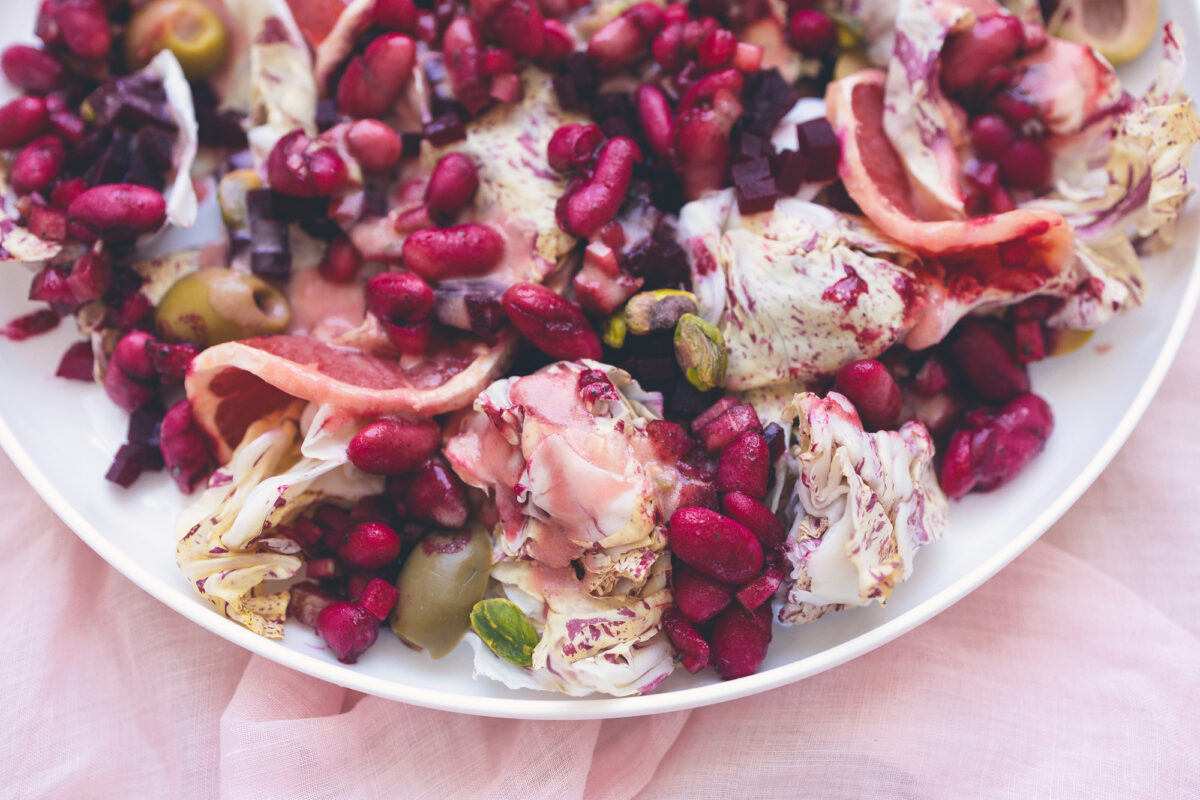















Be the first to comment