Have you ever gone into the fridge after a long day at work and thought… what the heck am I going to make tonight? Well, this week’s post is about building a new habit into your kitchen flow. It centers on sheet pan cooking, and if you are not doing it yet, it’s time to discover the value of waiting this way.
Most of us know what’s healthy. We struggle with Tuesday at 6 p.m. This series removes that friction: one pan of roasted vegetables, made once, that turns into four very different meals.
This is culinary medicine in practice: food that tastes great, supports long-term vitality, and fits the life you actually live. No perfection required. Swap what you have, skip what you don’t like, and make it yours. Cooking once should feel like a gift to future you.
What the evidence says
The research on home cooking is mostly observational, but it points in one direction. In a US national survey of 9,569 adults, people in households that cooked dinner 6 to 7 nights a week ate fewer calories, less fat and less sugar than those cooking 0 to 1 nights, whether or not they were trying to lose weight.
A UK study of 11,396 adults found something similar about eating. People who ate home-cooked meals more than five times a week, compared with those who ate fewer than three, ate about 62 grams more fruit and 98 grams more vegetables a day, had better DASH and Mediterranean diet scores, and were 28 percent less likely to have an overweight BMI.
The honest boundary: both studies are cross-sectional. People who cook often differ from people who don’t in income, time, and many other ways, and these designs cannot separate those factors from the cooking itself. They do show that the home kitchen and better diet quality travel together, which is reason enough to make home cooking easier.
One practical number matters for a plan like this. USDA guidance is to refrigerate cooked leftovers within 2 hours and use them within 3 to 4 days. That is why this is four meals, not seven.
What Ayurveda says
Ayurveda puts a high value on freshly cooked food. Food is understood to carry prana, life force, that fades with time; leftovers are considered heavier and harder to digest, and the classical ideal is to cook and eat a meal the same day.
At the same time, the tradition is practical about digestion. Warm, well-cooked, lightly spiced vegetables are considered easy on agni, the digestive fire, and roasting with herbs like rosemary and thyme fits that well, especially in the cooler months.
Where they agree, and where they don’t
They agree on freshness more than you might expect. The rule of this series is to add one fresh thing every day: crunchy raw vegetables, greens, herbs, avocado. That is the Ayurvedic instinct for prana, and it is also simply good nutrition, since leftovers lose vitamin C and crisp texture first.
Ayurveda is stricter than the evidence requires. Properly cooled and refrigerated roasted vegetables eaten within a few days are safe and still nourishing, and if you’re choosing between leftovers and takeout on a Tuesday night, the research on home cooking points firmly to leftovers.
The meal-prep world gets it wrong in the other direction: seven identical containers on Sunday, eaten through the following weekend. That goes past food-safety guidance, and it’s so boring that most people quit by Wednesday.
Where I hold the line: cook once, eat within four days, and make each meal different by adding something fresh.
So here’s what I cook
Here’s the move: roast everything on one pan, once. Deep, jammy, caramelized flavor, done. Then add one fresh thing each day, and it’s a whole new meal.
Roast. Make the sheet pan on the weekend.
Split. Store the sweet potato (A) and the ragù (B) separately.
Add. Each day, pull from A and B and add one fresh thing.
Riff. Use the switch-it-up ideas to change the flavor direction.
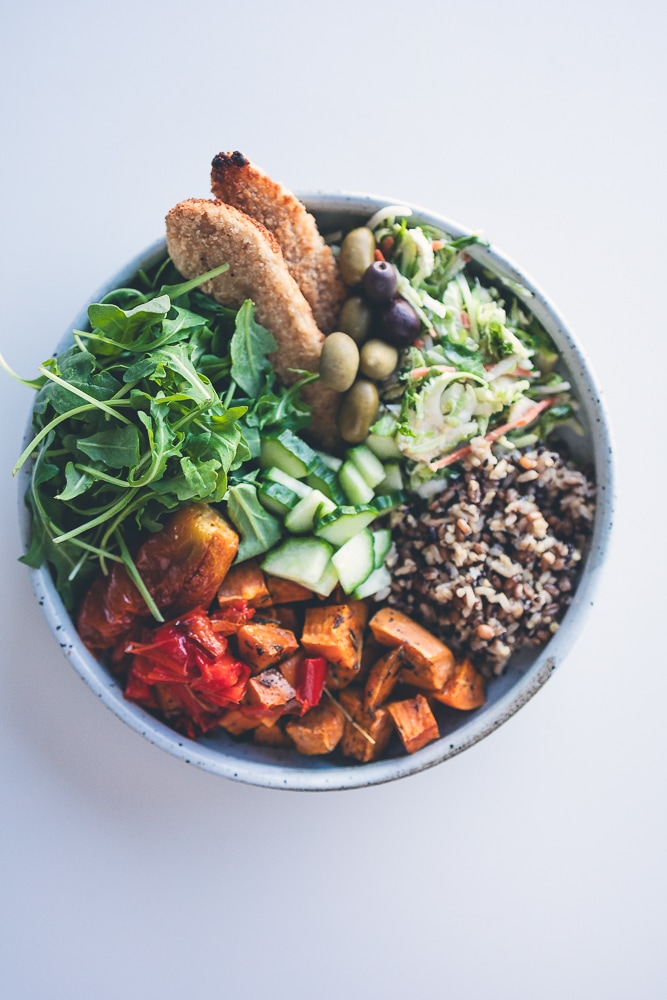
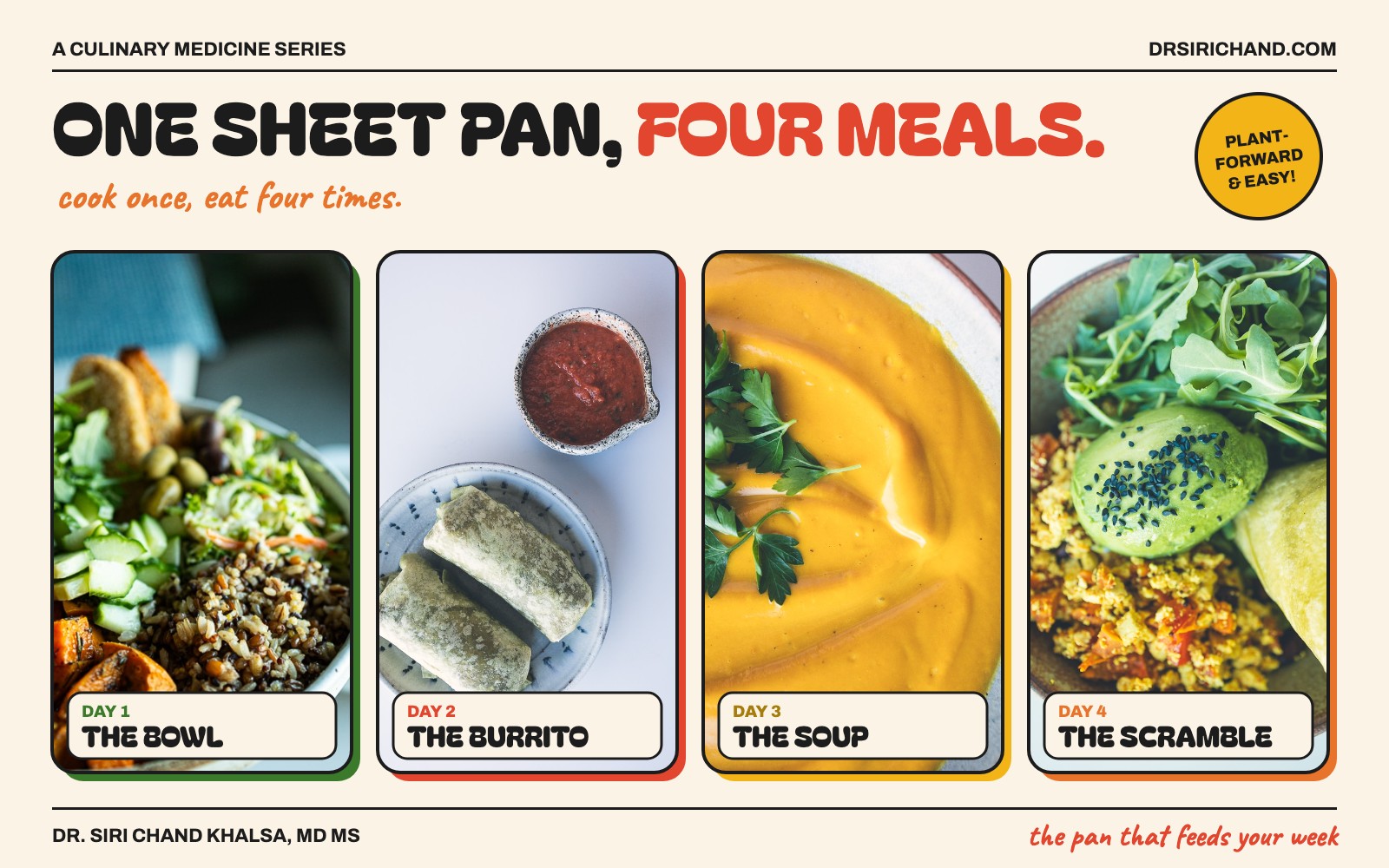
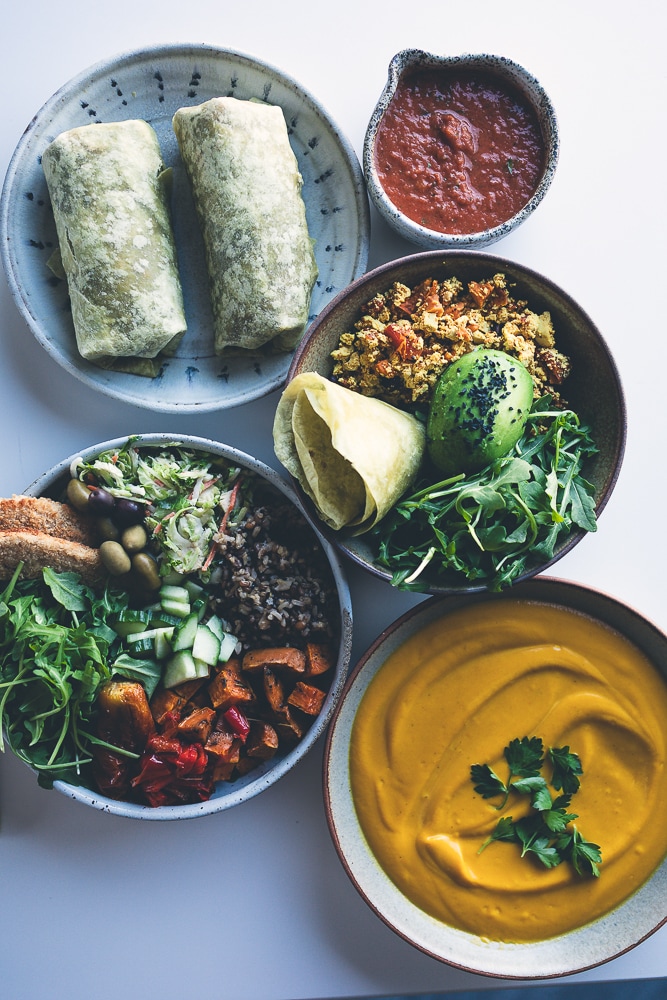
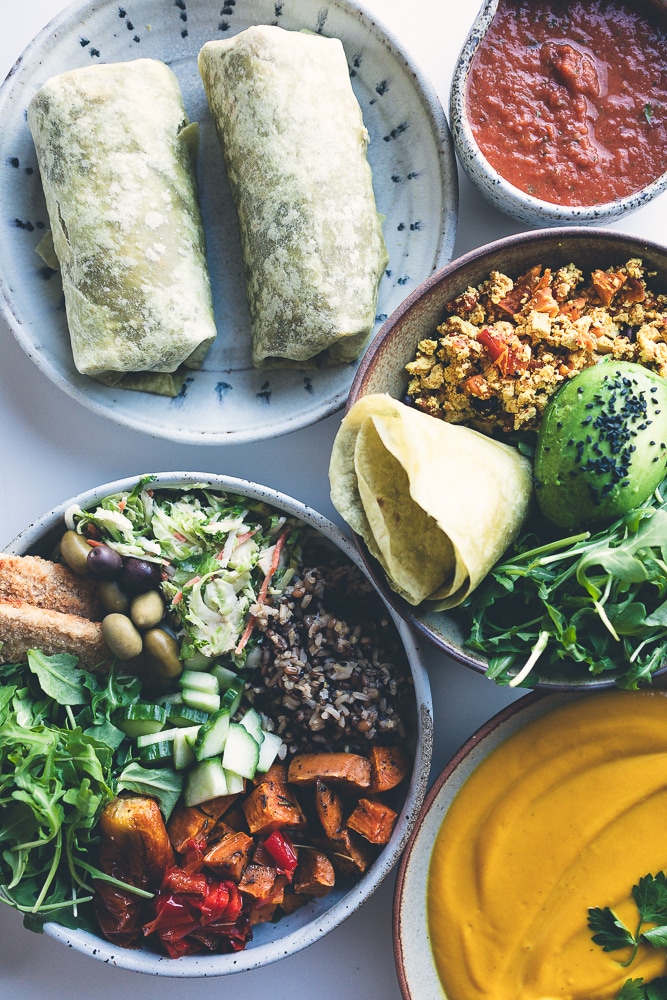
Day 1, The Bowl: grain, sweet potato, roasted tomato and pepper, arugula, cucumber, olives and Brussels slaw. Fresh thing: crunchy raw vegetables.
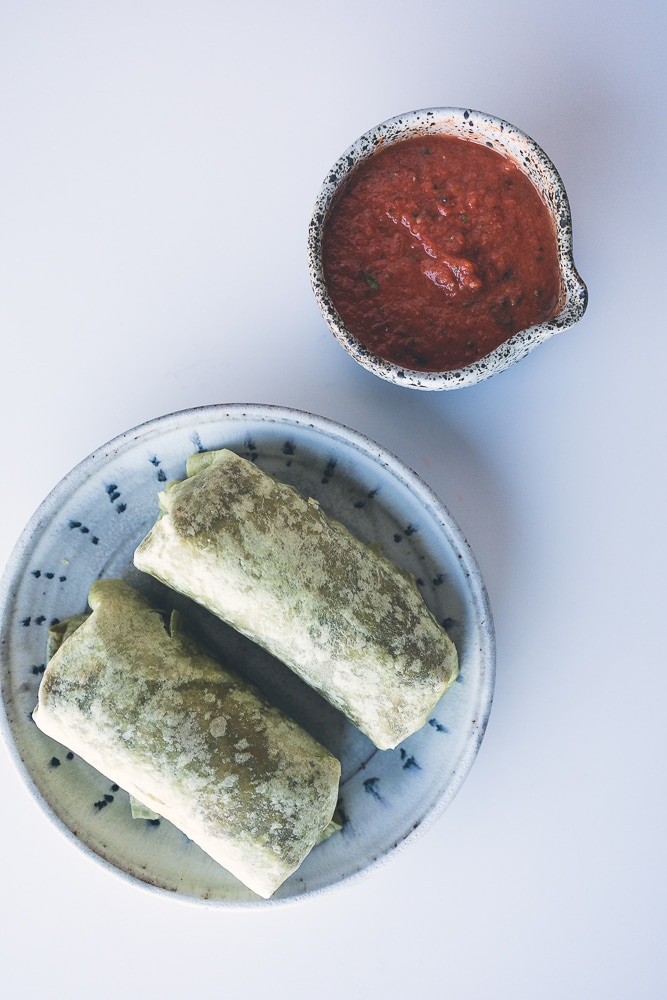
Day 2, The Burrito: mashed sweet potato, beans, roasted peppers and onion, greens and salsa, rolled tight. Fresh thing: greens and salsa.
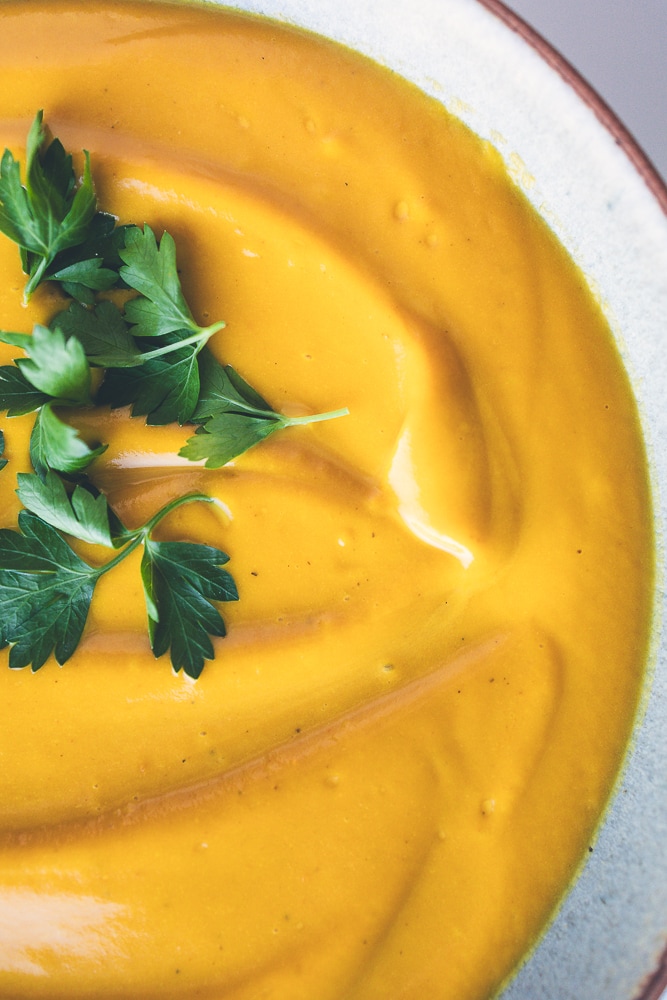
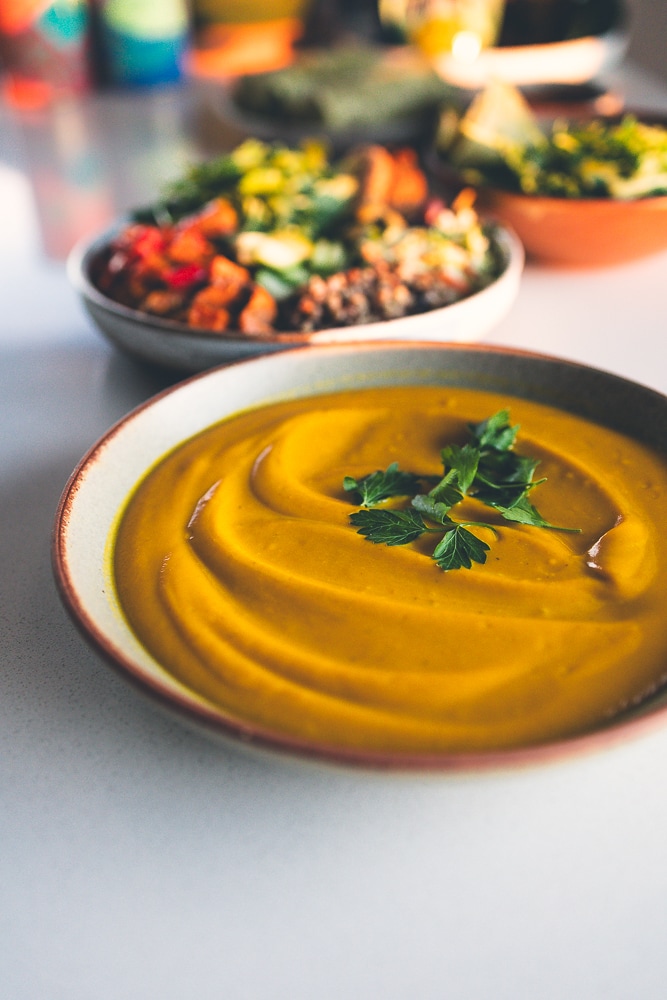
Day 3, The Soup: sweet potato and ragù blended with broth until silky and golden. Fresh thing: parsley or herb oil.
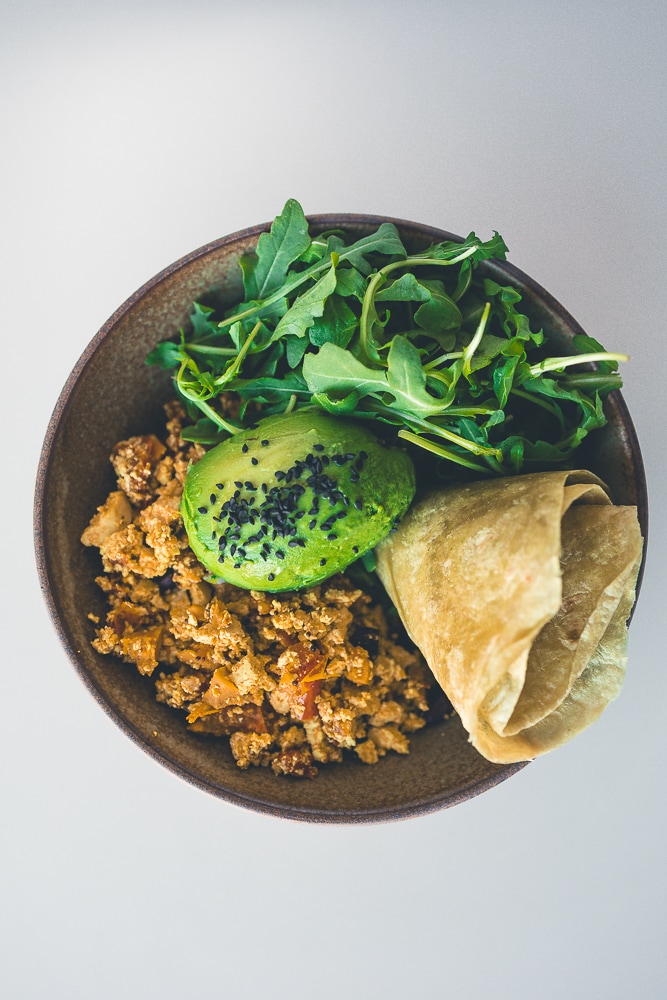
Day 4, The Scramble: crispy sweet potato, turmeric tofu and roasted tomato. Fresh thing: avocado, black sesame and arugula.
Onion and garlic in the pan are your choice. I often leave them out, as they upset my digestion; a pinch of hing (asafoetida) in the soup or scramble covers the savory depth.
References
Mills S, Brown H, Wrieden W, White M, Adams J. Frequency of eating home cooked meals and potential benefits for diet and health: cross-sectional analysis of a population-based cohort study. Int J Behav Nutr Phys Act. 2017;14(1):109. PubMed · doi:10.1186/s12966-017-0567-y
Wolfson JA, Bleich SN. Is cooking at home associated with better diet quality or weight-loss intention? Public Health Nutr. 2015;18(8):1397-1406. PubMed · doi:10.1017/S1368980014001943
One pan of roasted sweet potatoes, tomatoes and peppers, made once on the weekend, that becomes a bowl, a burrito, a soup and a scramble during the week. Onion and garlic are optional.
Ingredients
Scale
2 large sweet potatoes, cubed
6 to 8 Roma tomatoes, halved
2 red bell peppers, cut in strips
2 whole onions, skins on (optional)
1 head garlic, cloves separated (optional)
2 to 3 tbsp olive oil
1 tsp sea salt and black pepper
A few sprigs fresh rosemary and thyme
Instructions
Heat the oven to 400°F and line 1 or 2 large rimmed sheet pans with parchment.
Toss everything with a glug of olive oil, a big pinch of salt, pepper and the herbs.
Spread it out in one layer. Crowding means steaming, so grab a second pan if you need it.
Roast 35 to 45 minutes, flipping once, until the edges go dark and jammy.
Store it in two parts: (A) the sweet potato cubes, kept whole, and (B) the ragù: tomatoes, peppers, and onion and garlic if using, squeezed from their skins and chopped together.
Cool and refrigerate within 2 hours in lidded containers.
Notes
Bonus roasted tomato salsa: blitz some of the ragù with lime, cilantro and chili. It is the glue between the burrito, scramble and bowl.
Use the roasted vegetables within 3 to 4 days (USDA guidance). Reheat leftovers until steaming hot (165°F).
Prep Time:15 minutes
Cook Time:45 minutes
Category:Meal Prep
Method:Roasting
Cuisine:American
Make it yours
Gear: 1 to 2 large rimmed sheet pans, parchment, a sharp knife and board, 4 lidded containers, a blender for the soup and salsa, and a skillet.
Shopping, at a glance. The pan: sweet potatoes, Romas, red peppers, rosemary and thyme, plus onions and garlic if you like them. The week: grain, beans, tofu, tortillas, greens, cucumber, avocado, lime, cilantro and broth.
Swap freely: butternut squash or carrots for sweet potato, cherry tomatoes for Roma, any color pepper. Keep the pieces about the same size so they roast evenly.
Who this isn’t for
Food safety first: cool roasted vegetables and refrigerate within 2 hours; use within 3 to 4 days, and reheat leftovers until steaming hot (165°F). This series may include soy, tree nuts, sesame, and wheat; swap freely to suit your needs. If you are managing a medical condition, take medications, or are pregnant or nursing, talk with your own healthcare provider before making big changes to your diet.
Questions I get
How long do roasted vegetables last in the fridge?
Use them within 3 to 4 days, refrigerated within 2 hours of cooking, per USDA guidance. That is why this plan is four meals, not a full week.
Can I freeze roasted vegetables?
Yes. The sweet potato and ragù freeze well for a few months. Freeze extra burritos wrapped in parchment, then foil, and reheat at 375°F for 20 minutes.
Why are my roasted vegetables soggy?
The pan is too crowded. Vegetables that touch steam instead of roast. Spread them in one layer and use a second pan if you need it.
Do I have to use onion and garlic?
No. They are optional. Leave them off the pan and add a pinch of hing (asafoetida) to the soup or scramble for savory depth.
What temperature should I roast vegetables at?
400°F for 35 to 45 minutes, flipping once, until the edges are dark and jammy. High heat caramelizes natural sugars and concentrates flavor.
Is cooking at home actually healthier?
Studies consistently link frequent home cooking with better diet quality, including fewer calories, less sugar and more fruits and vegetables. They are observational, so they show an association rather than proof, but the pattern is consistent.
Learning about Plant-Based Eating
Having the right resources to learn about plant-based vegan principles is important for everyone.
These books are among my tried-and-true favorites, ones I have repeatedly referred to over the years. Let me know if you pick any of them up and what you learn.
Join me in the community!
Looking to make a positive change in your life and community clinically? Dr. SiriChand is a board-certified physician in Internal Medicine, Integrative Medicine, Lifestyle Medicine, and Hospice/Palliative Medicine. She has dedicated her career to promoting long-term vitality through the choices we make every day and is an expert in Ayurveda and plant-based nutrition.
She works with physicians to explore how to create time for self-care and how to learn to innovate in their integrative medicine careers. Take the first step toward an aligned, happier future by learning more about the community we are creating today.
Let’s create a better world for female physicians through intentional, mindful living.
If you make this, tag me on social media at @doctorsirichand. I would love to see your variations and flavor options.
Save this Recipe for later to your favorite place. I prefer using Pinterest, but you can also clip it elsewhere.
*Please note as an affiliate, I earn from qualifying purchases which means I will receive a small fee if you purchase them. I have only included things I truly use. This post is for educational and informational purposes only and solely as a self-help tool for your own use. I am not providing medical, psychological, or nutrition therapy advice. You should not use this information to diagnose or treat any health problems or illnesses without consulting your own medical practitioner. Always seek the advice of your own medical practitioner and/or mental health provider about your specific health situation. For my full Disclaimer, please go here.










Be the first to comment