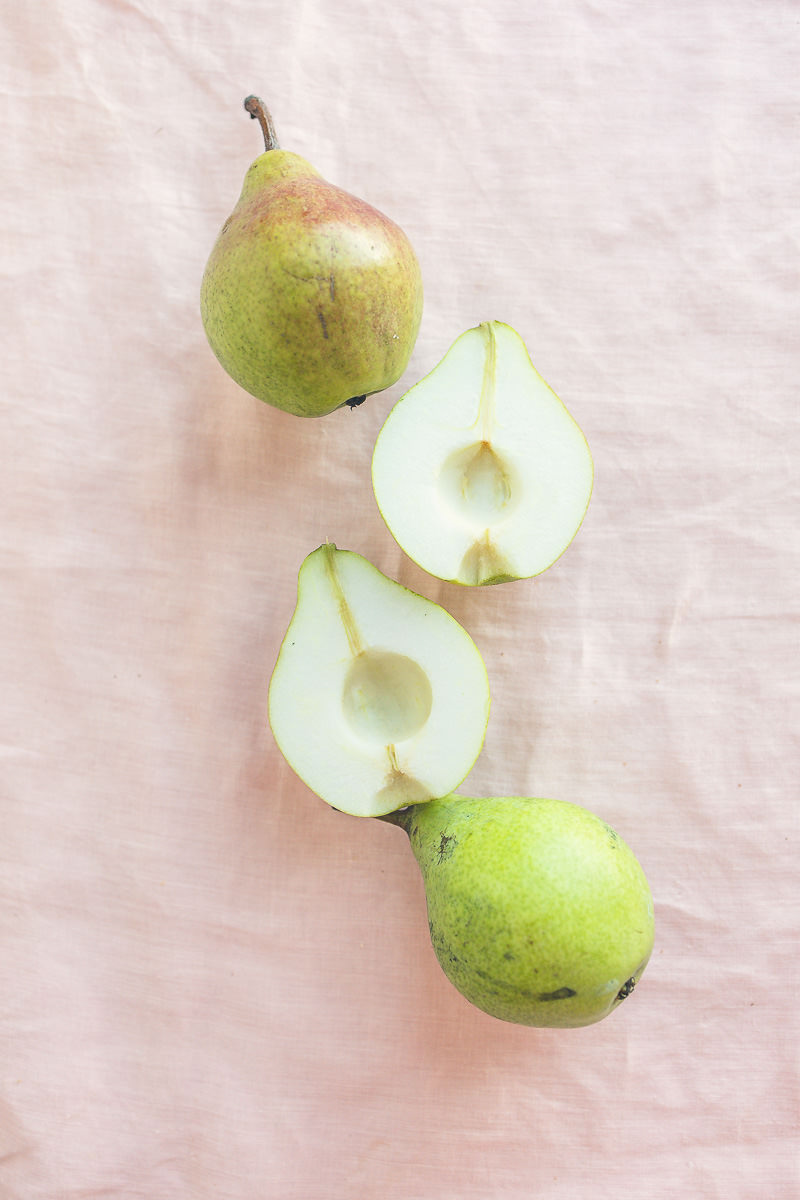
There is a two-week stretch at the end of August when the fruit bowl needs a little more exploration. The peaches are at their best and about to be gone. The first pears have come in, still hard, not ready for anything. Nobody knows quite what to do with a fruit bowl in transition, so most of it goes soft on the counter.
Possibly one of the best culinary moments of my entire life was eating a perfectly ripe peach after a soccer game when I first moved to San Francisco after college.
I was part of an adult league, and we traveled outside of the city, and there was a peach stand on the way home where we stopped.
I unsuspectingly picked up a peach, assuming it would be the same as all the ones I’ve had before. However, it wasn’t. This peach was nearly perfect.
Since then, peaches carry a certain delight for me.
Perhaps the connection to that moment, or just an awakening to the delicate flavors that live inside peaches when they’re perfectly ripe – which only happens for a short time every year has led me to create this salad each year. However, this year I did something a little different. I made them into a salad.
This salad came together in what I might describe as a moment of serendipity. I haven’t made this before, but I had opened the coconut condensed milk as a topping for a homemade peach sorbet.
A fruit salad that is as amazing as any dessert
Many palnt based fruit salads have heavy coconut cream, honey, marshmallows, a cup of yogurt. By the time you finish dressing it, the fruit is no longer so apparent.
I wanted to create something that complemented the flavor. This dressing has four ingredients; it pours in a thin ribbon rather than coating anything, and it is built on vinegar and fresh ginger. It has one tablespoon of sweetened condensed coconut milk in it, for four servings.
The ginger enhances the salad with a slightly savory taste. Enjoy this dish after a heavy lunch in the mid-afternoon when cravings for something sweet might arise.
How to Peel a Peach
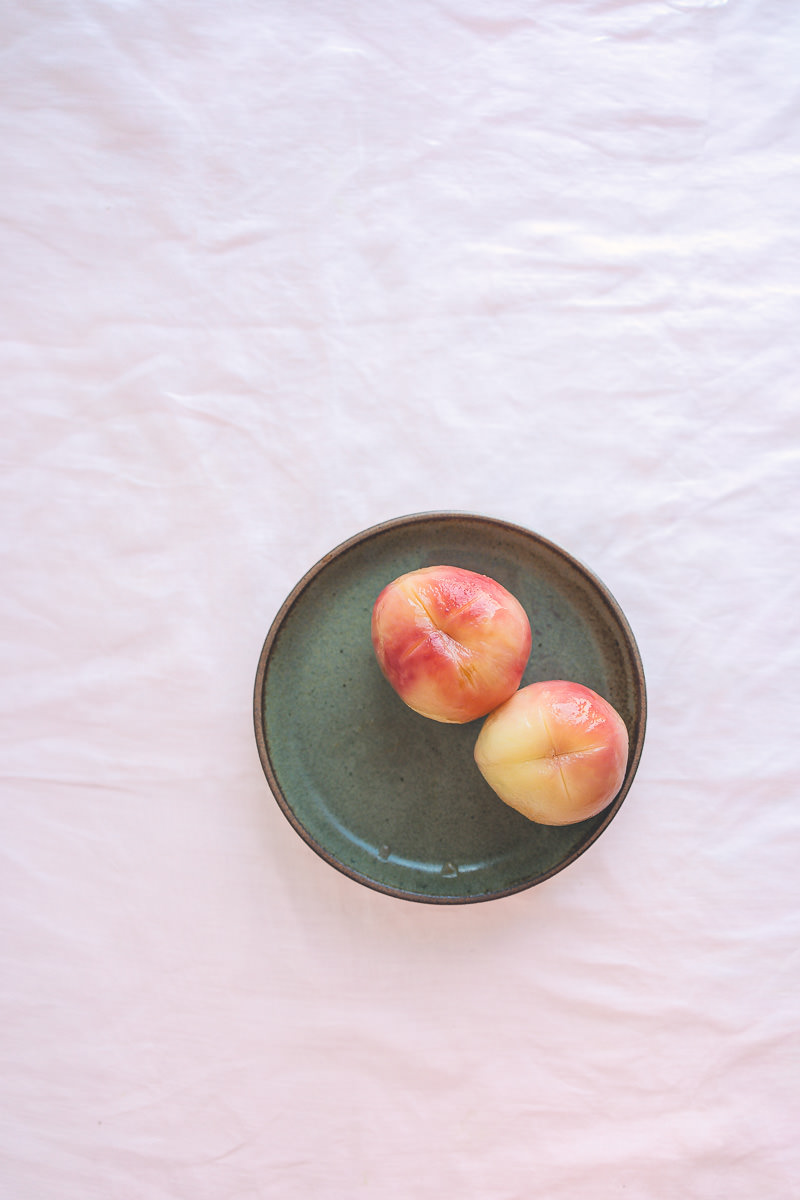
Taking the skin off the peaches for some makes them more palatable in salad. Here’s how to do it. Score a shallow cross through the skin at the base of each peach. Drop them into boiling water for thirty seconds, then straight into ice water. The skin peels away from the cross with your fingers.
Anthocyanins, the compounds that make blueberries blue and that have been the focus of most research, degrade with both temperature and time. In an analysis of blueberries prepared several different ways, microwaving produced the greatest polyphenol losses, with meaningful degradation across thermal methods generally. So most everything in this dish with pigment stays raw and cold, with one thing that meets heat for half a minute and then gets stopped hard in ice.
I like a recipe where the technique and the reasoning lead to a wonderful dish.
Why blueberries, specifically?
Because the evidence on them is unusually good, and because I would rather share what evidence says rather than allude to it.
A double-blind randomized controlled trial in sixty-one healthy adults aged sixty-five to eighty found that daily wild blueberry powder providing 302 mg of anthocyanins, the equivalent of roughly 178 grams of fresh berries, improved vascular function and cognitive performance and lowered twenty-four-hour ambulatory systolic blood pressure over twelve weeks.
Now, to be clear, one hundred seventy-eight grams is about a cup and a half of fresh blueberries. Every day. For three months. That is a real commitment and considerably more than most people eat. Half a cup across four servings of this salad does not replicate a trial, and I am not going to pretend otherwise.
What it does is put August and raw blueberries in front of you as a reminder, in a form you actually want to eat, on a day you were going to eat something anyway. A single salad is not an intervention; it is one of the thirty or so different plants worth getting into a week.
The Science Behind Anti-Inflammatory Eating
In addition to the actions of making this meal, there are also the properties of the “ingredients” in this recipe. This Valentine’s Day, instead of reaching for the usual treats (which absolutely have their place, especially dark chocolate truffles), also consider a different kind of love language for yourself: nutrient-dense foods that reduce inflammation and support heart health.
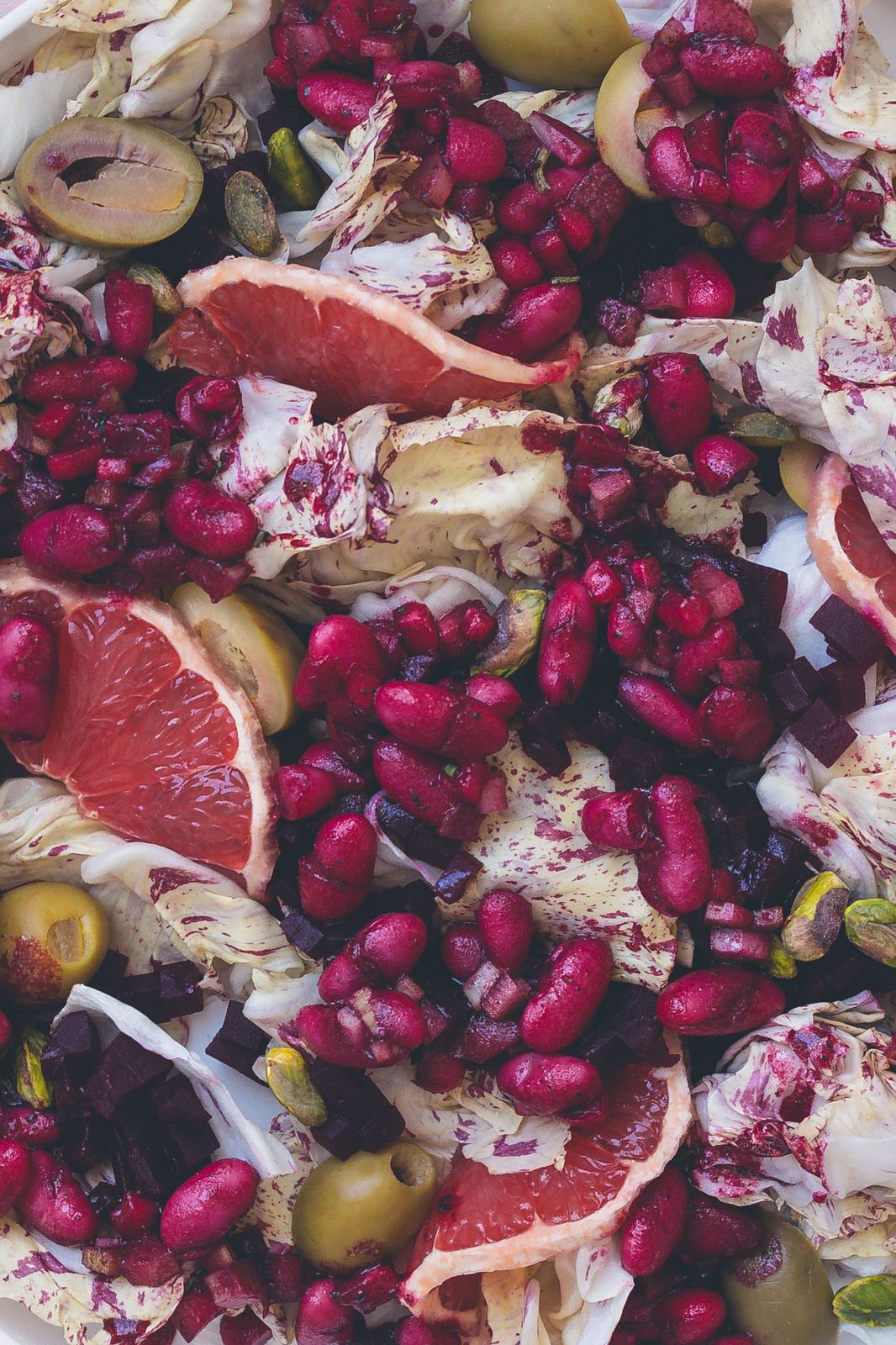
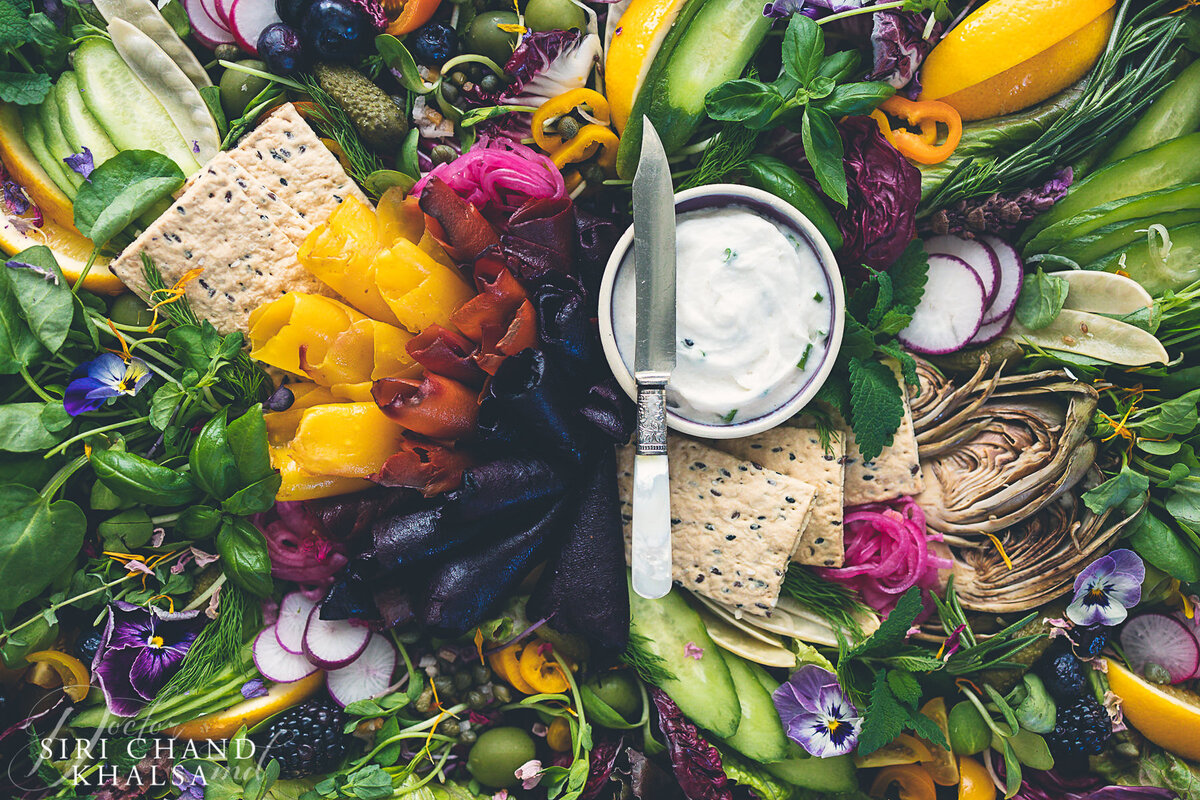
Research published in Advances in Nutrition demonstrates that anthocyanins, the vibrant pigments found in radicchio and other purple-red vegetables, can regulate different signaling pathways involved in cardiovascular disease development (Wallace, 2011). These compounds aren’t just pretty; they’re powerful anti-inflammatory agents that protect your endothelial function and reduce oxidative stress.
Similarly, betalains, the ruby-red pigments in beets, offer remarkable cardiovascular benefits. A comprehensive review in Nutrients reported that betalains exhibit potent antioxidant and anti-inflammatory activities in vitro and in vivo, with potential protective effects against cardiovascular disease (Clifford et al., 2015). The study noted that beetroot supplementation has been shown to reduce blood pressure, preserve endothelial function, and attenuate inflammation.
References
Clifford, T., Howatson, G., West, D. J., & Stevenson, E. J. (2015). The potential benefits of red beetroot supplementation in health and disease. Nutrients, 7(4), 2801-2822. https://doi.org/10.3390/nu7042801
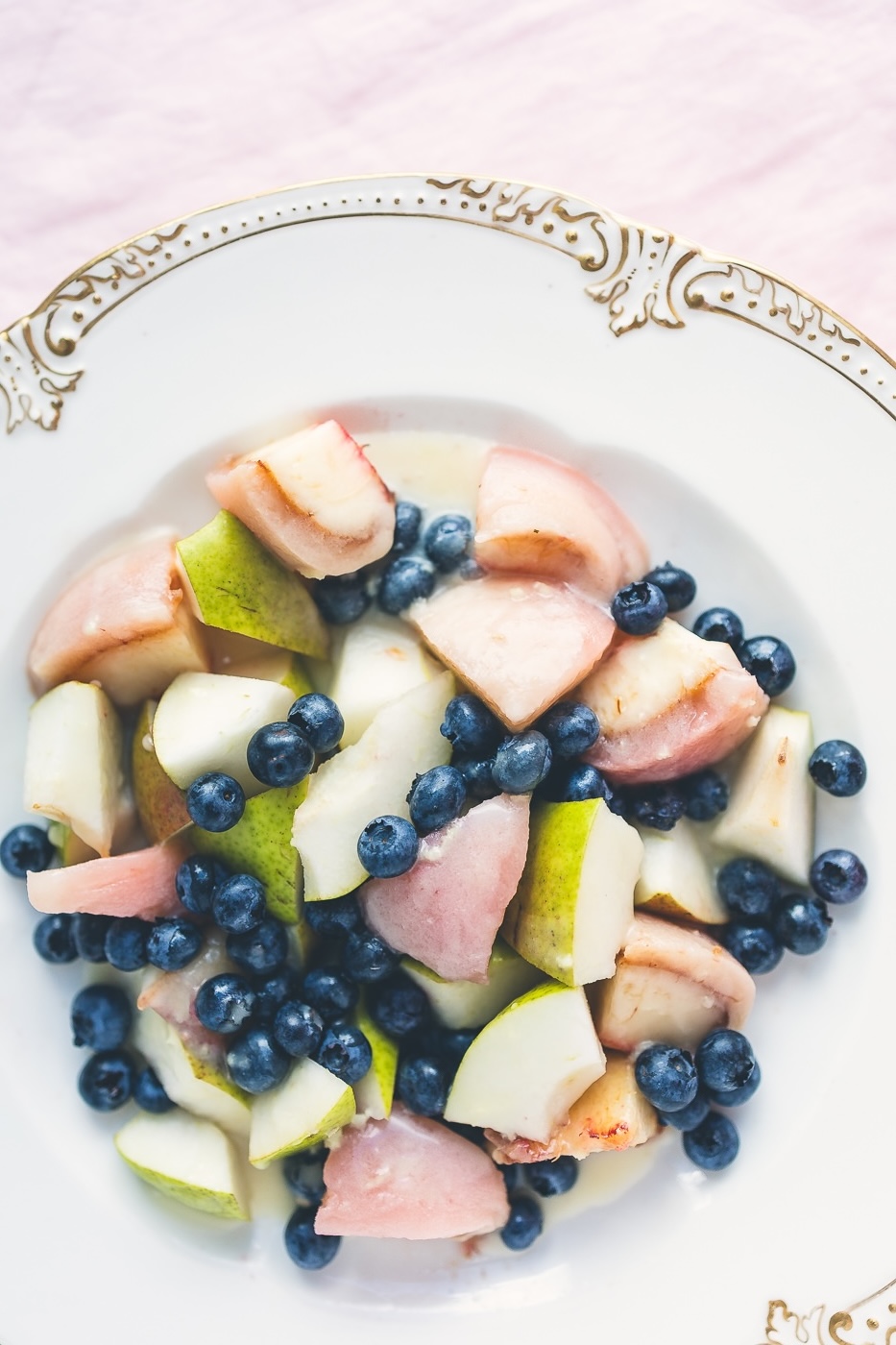
Summer fruit salad with peaches, pears, and blueberries in a ginger coconut dressing is an easy no-bake dessert for brunch, potlucks, and Labor Day weekend. Peeled white peaches, green pears with the skin on, cold raw blueberries, and a four-ingredient dressing you whisk in a bowl. Vegan, dairy-free, gluten-free, no refined sugar.
Ingredients
Scale
2 ripe white peaches
2 green pears, firm
1/2 cup blueberries, cold
1 tbsp white balsamic vinegar
2 tbsp water, plus more as needed
1/2 tsp finely grated fresh ginger
1 tbsp sweetened condensed coconut milk
Edible flowers or torn mint, to serve
Instructions
Score the peaches. Cut a shallow cross through the skin at the base of each just the skin, not into the flesh. Bring a pot of water to a rolling boil and set a bowl of ice water beside the stove.
Blanch for 30 seconds. Lower the peaches into the boiling water for 30-60 seconds, then lift them straight into the ice water using tongs. Once cool, the skin peels away from the scored cross with your fingers. Halve, remove the stones, and cut into chunks.
Cut the pears to match. Skin on, cored (I like to use a melon baller to remove the core), and cut to the same size as the peach.
Combine the white balsamic, water, grated ginger, and condensed coconut milk. Whisk until thin and creamy; it should pour in a ribbon but not be heavy enough to coat a spoon. Add water a teaspoon at a time if it is too thick.
Combine the peach and pear in a shallow bowl. Spoon the dressing over and let it sit 10 minutes, so the fruit gives up a little juice and a light syrup forms on its own.
Blueberries are last to be added. Bring them straight from the refrigerator. Scatter edible flowers or torn mint over as it goes to the table.
Prep Time:15 minutes
Category:fruit salad
Freeze some of the extra peaches for later for a sorbet.
Learning about Plant-Based Eating
Having the right resources to learn about plant-based vegan principles is important for everyone.
These books are among my tried-and-true favorites, ones I have repeatedly referred to over the years. Let me know if you pick any of them up and what you learn.
Join me in the community!
Looking to make a positive change in your life and community clinically? Dr. SiriChand is a board-certified physician in Internal Medicine, Integrative Medicine, Lifestyle Medicine, and Hospice/Palliative Medicine. She has dedicated her career to promoting long-term vitality through the choices we make every day and is an expert in Ayurveda and plant-based nutrition.
She works with physicians to explore how to create time for self-care and how to learn to innovate in their integrative medicine careers. Take the first step toward an aligned, happier future by learning more about the community we are creating today.
Let’s create a better world for female physicians through intentional, mindful living.
If you make this, tag me on social media at @doctorsirichand. I would love to see your variations and flavor options.
Save this Recipe for later to your favorite place. I prefer using Pinterest, but you can also clip it elsewhere.
Dr. Siri Chand
SHARE
May your life be nourished and vital!
*Please note as an affiliate, I earn from qualifying purchases which means I will receive a small fee if you purchase them. I have only included things I truly use. This post is for educational and informational purposes only and solely as a self-help tool for your own use. I am not providing medical, psychological, or nutrition therapy advice. You should not use this information to diagnose or treat any health problems or illnesses without consulting your own medical practitioner. Always seek the advice of your own medical practitioner and/or mental health provider about your specific health situation. For my full Disclaimer, please go here.























Be the first to comment